
As a business owner, you’re used to thinking strategically — about customers, cash flow, and competition. But have you thought globally?
In today’s interconnected economy, putting all your eggs in one geographic basket can be risky. That’s where global market diversification comes in — and it’s not just for multinational corporations. Whether you run an e-commerce brand, a manufacturing firm, or a digital agency, expanding or investing globally can protect your business and unlock new growth.
Let’s explore what global diversification really means and how it can help your business stay ahead in uncertain times.
🌐 What Is Global Market Diversification?
Global market diversification means expanding your business exposure beyond your home country. This could involve:
Selling products or services in international markets
Sourcing from global suppliers to reduce costs or risks
Investing profits in international assets or markets
Partnering with overseas companies for innovation and scale
The goal? Reduce dependence on one economy, currency, or customer base — and open the door to new revenue streams.
📉 Why Staying Local Is Risky
Relying solely on your domestic market exposes your business to:
Economic slowdowns (e.g. recessions or inflation spikes)
Regulatory changes that limit business activity
Currency fluctuations that affect your cost structure
Geopolitical uncertainty or trade restrictions
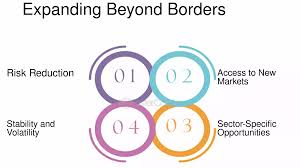
When one market suffers, others might be thriving. Global diversification helps smooth out the bumps.
📈 The Business Case for Going Global
Here’s how international diversification can benefit your business:
- New Customers, Bigger Revenue
Accessing new markets means more potential buyers, often in faster-growing economies.
- Hedge Against Local Risks
If your home market slows down, international sales or investments can keep your revenue stable.
- Supply Chain Resilience
Sourcing from multiple regions can help reduce reliance on a single supplier or region (hello, 2020 supply chain shocks).
- Currency Advantages
If your business earns in multiple currencies, you’re less vulnerable to one currency’s ups and downs.
- Brand Credibility
International presence can enhance your brand’s authority and perceived value — especially in competitive industries.
🌎 How to Start Diversifying Globally
You don’t have to go all-in overnight. Start small and build:
✅ Market Research
Use data to identify global regions with demand for your product/service.
✅ Digital Expansion
Leverage e-commerce platforms, digital marketing, or global marketplaces (like Amazon, Alibaba, or Etsy).
✅ Foreign Investments
Consider investing business profits in international stocks, ETFs, or real estate as a hedge.
✅ Global Partnerships
Work with overseas distributors, agencies, or tech partners to test new markets without heavy infrastructure.
🚧 Common Pitfalls to Avoid
Ignoring cultural nuances — Localization matters more than translation.
Skipping compliance research — Tax, trade, and legal rules vary.
Underestimating logistics — Shipping, taxes, and returns need planning.
A well-researched, phased approach keeps the risks manageable.
💬 Final Thought: The World Is Bigger Than Your Backyard
Global diversification isn’t just for Fortune 500s. As a business owner, expanding your horizons can be the strategic edge you need in a volatile world.
Whether you’re exporting products, investing abroad, or building international partnerships, thinking globally positions your business for resilience, relevance, and long-term success.