
When you hear the term offshore investing, what comes to mind? Secret Swiss bank accounts? Billionaires hiding money on tropical islands?
That’s the Hollywood version.
In reality, offshore investing is a legitimate, strategic tool used by individuals and businesses around the world to diversify their portfolios, protect assets, and sometimes even reduce tax burdens—legally.
Let’s break it down.
🌍 What Is Offshore Investing?
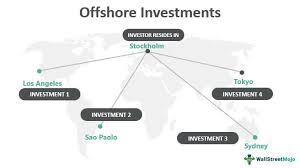
Offshore investing simply means putting your money into financial assets located outside your home country. This could be:
- A savings account in Singapore
- Real estate in Portugal
- Stocks on the London or Hong Kong exchanges
- A mutual fund based in the Cayman Islands
It’s not just for the ultra-wealthy. Offshore options are becoming increasingly accessible for everyday investors.
💡 Why Do People Invest Offshore?
1. Diversification
Don’t put all your eggs in one country’s basket. Political instability, economic downturns, or currency devaluation can all hit your home market hard. Offshore investing spreads your risk globally.
2. Asset Protection
In countries with legal or political uncertainty, moving assets offshore can offer a layer of protection against lawsuits, currency controls, or government seizure.
3. Tax Optimization
While not a way to evade taxes (which is illegal), offshore jurisdictions may offer lower or no taxes on certain types of income. With proper planning, this can be part of a legal tax strategy.
4. Access to Global Markets
Some of the best investment opportunities may be outside your home country. Offshore investing gives you access to new markets, industries, and currencies.